
Cold Email Deliverability in 2026: Why Outbound Lands in Spam (And How to Protect Your Primary Domain)
Discover why modern B2B cold emails land in spam and how configuring secondary domains, SPF, DKIM, DMARC, and safe warm-up protocols guarantees 98%+ primary inbox placement.
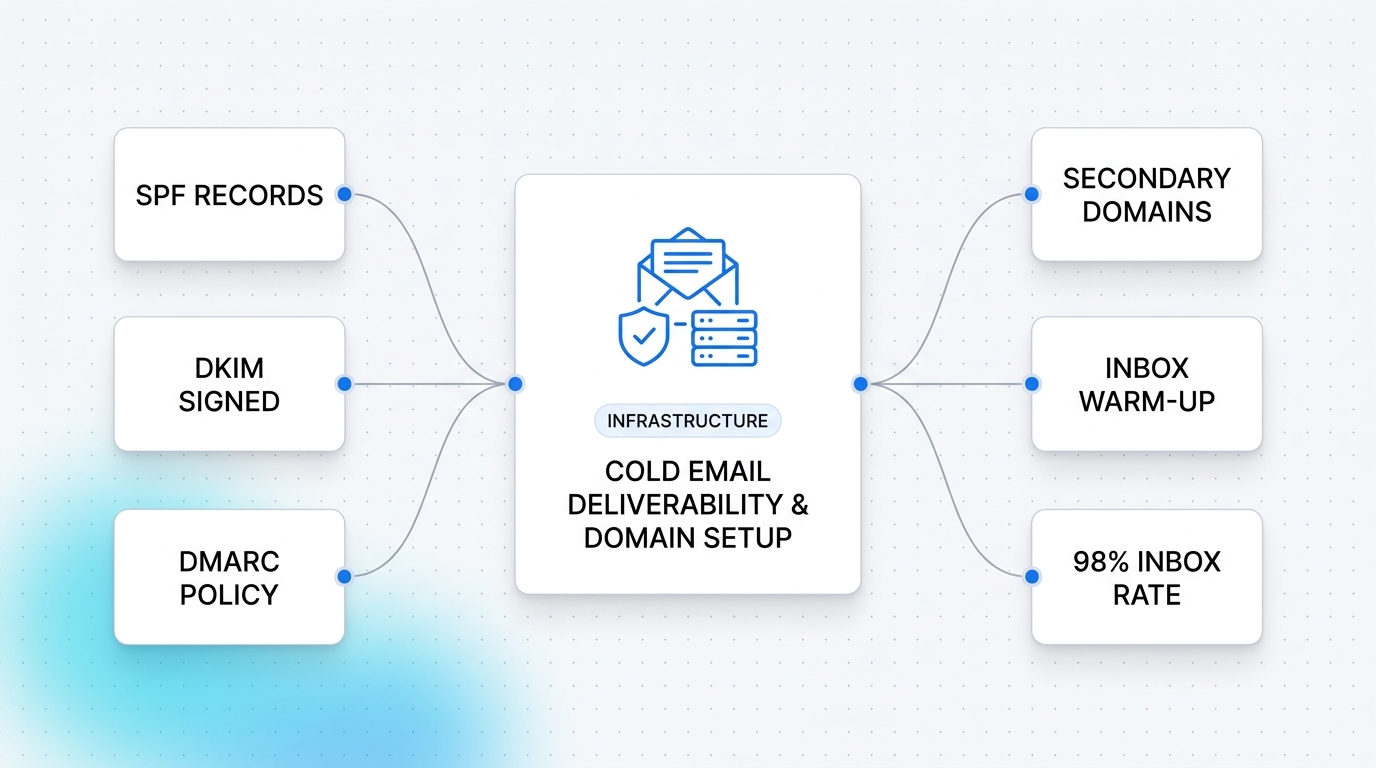
If your outbound campaigns have seen open rates plummet or prospect replies dry up overnight, you are not imagining things. In 2026, cold email deliverability is facing its most aggressive crackdown in internet history.
Google Workspace and Yahoo have rolled out strict bulk-sender authentication mandates, while Microsoft 365 deployed machine-learning AI defenders that silently quarantine unverified outbound messages. Whether you run outbound internally or partner with a professional cold email agency, the days of uploading unverified contact lists and blasting generic emails from your everyday corporate inbox are permanently over.
The penalty for ignoring these changes is catastrophic: your primary domain gets blacklisted, your daily client invoices land in spam, and qualified meetings disappear. Unlike high-volume b2b lead generation companies that burn domain reputation with volume-first blasts, modern sales teams require disciplined email deliverability engineering and secondary sending infrastructure to consistently land in the primary inbox.
The Core Danger: Why You Must Never Send Outbound from Your Primary Domain
The single most dangerous mistake scaling businesses make is launching cold outreach campaigns from their primary corporate domain (e.g., yourcompany.com).
In 2026, Google and Yahoo enforce a ruthless 0.3% spam complaint threshold. That means if just 3 out of 1,000 recipients flag your message as spam, your entire domain reputation is destroyed. When an unspecialized team sends cold outreach from a main company domain:
- Operational Chaos: Critical business communications to existing clients, banking partners, and investors start landing in spam folders.
- Severe Blacklisting: Getting removed from global blocklists (like Spamhaus or Barracuda) can take months of technical appeals.
- Zero Margin for Error: Rebranding your primary corporate domain disrupts years of organic search rankings and brand equity.
The Solution: Dedicated Secondary Sending Infrastructure.
Any reputable cold email agency deploys alternative, look-alike domains exclusively for outreach (such as getcogniclose.com or cogniclosehq.com). Each secondary domain is configured with automatic 301 redirects to your primary website. If a secondary inbox ever faces deliverability friction, your primary domain remains 100% insulated and pristine.
How to Set Up DKIM, SPF, and DMARC: The DNS Authentication Trinity
Spam filters evaluate technical authentication before your email content is even evaluated. Knowing how to set up DKIM, SPF, and DMARC correctly is mandatory for any team serious about outbound deliverability:
1. SPF (Sender Policy Framework): Your Domain's Authorized ID Card
An SPF record is a public TXT record in your DNS settings specifying exactly which IP addresses and mail servers are authorized to dispatch emails for your domain. Receiving servers evaluate SPF to confirm: "Is this mail server genuinely permitted to send on behalf of this company?" Without SPF, receiving filters assume your email is spoofed or fraudulent.
2. DKIM (DomainKeys Identified Mail): The Tamper-Proof Cryptographic Signature
While SPF authenticates the server, DKIM authentication protects the integrity of the message. When an email is dispatched, your server attaches an encrypted digital signature to the email header. The recipient's mail provider uses your public DKIM key to verify that the message was genuinely sent by you and was not altered in transit.
3. DMARC (Domain-based Message Authentication, Reporting & Conformance): Policy Enforcement
DMARC ties SPF and DKIM together. It instructs receiving providers what action to take if an incoming email fails verification. In 2026, major providers enforce strict DMARC alignment. Teams should begin with a monitoring policy (p=none) and gradually advance to quarantine or reject policies (p=quarantine or p=reject) to ensure maximum deliverability protection.
Bonus: Custom Tracking Domains (CNAME)
Standard sales engagement platforms track email opens and link clicks using shared generic proxy links. Because thousands of spammers share those same default tracking links, modern filters flag them automatically. A specialized b2b email marketing agency configures a custom CNAME tracking domain (such as track.yourdomain.com), ensuring all telemetry runs exclusively on your own branded SSL certificate.
The Safe Sending Formula: Warm-Up Protocols and Daily Volume Caps
Registering a fresh domain and immediately sending 100 cold emails is the quickest way to trigger automated spam filters. Email service providers monitor sending volume velocity closely.
To scale outbound safely, follow the Safe Outbound Protocol:
- 14 to 21 Days of Automated Peer Warm-Up: Connect fresh inboxes to a peer-to-peer deliverability network before launching outreach. This builds positive sender history (inbox placement, opens, and positive thread replies) across Google Workspace and Microsoft 365 environments.
- The Rule of 40 (Volume Capping): Cap sending volume at 30 to 40 cold emails per inbox per day (including automated follow-ups). Blasting 150+ emails from a single inbox inevitably triggers burner filters within 60 days.
- Scale Horizontally Across Inboxes: If your campaign requires 3,000 monthly sends, do not push more emails through one inbox. Deploy 5 secondary domains with 2 inboxes each (10 inboxes total), distributing 30 emails per inbox effortlessly without raising algorithmic flags.
Copywriting Traps That Trigger Modern Spam Filters
Even with flawless DNS records, poorly formatted email copy will land your message in the promotions or junk tab:
- Avoid Aggressive Spam Trigger Words: Words like "Guaranteed", "100% Free", "Risk-free", "Act Now", and excessive dollar symbols (
$$) alert natural language processing (NLP) filters. Write conversationally as you would to an executive peer. - Stick to Clean Plain Text: Heavy HTML templates, image banners, and stylized signatures signal promotional marketing blasts. Decision-makers communicate in clean, simple plain text.
- Minimize Hyperlinks: Every external link increases spam risk. Limit initial cold messages to zero links or a single low-friction reference. Never use URL shorteners like bit.ly.
- Enforce Strict List Verification: High bounce rates destroy email deliverability immediately. Run all prospect contacts through verified validation tools like NeverBounce or ZeroBounce to maintain bounce rates strictly below 2%.
How CogniClose Eliminates Email Deliverability Headaches
Managing secondary domains, DNS records, daily warm-up telemetry, and inbox rotation requires dozens of technical hours each month. For growing B2B teams, managing infrastructure distracts from closing revenue.
This is where CogniClose functions as your complete managed cold email agency:
- Turnkey Secondary Domain Setup: We provision and manage isolated secondary sending domains that protect your primary company reputation completely.
- Complete DNS Architecture: We configure and verify SPF, DKIM, DMARC, MX, and custom SSL tracking records without requiring IT overhead from your team.
- Continuous Deliverability Monitoring: Every sending account undergoes disciplined multi-week warm-up with real-time reputation scoring to maintain 98%+ primary inbox delivery.
- Human Appointment Setter Oversight: Beyond deliverability, our dedicated sales pod manages live inbox conversations, handles prospect objections, and books qualified discovery meetings directly on your calendar.
The Bottom Line
In 2026, cold outbound is not dead—but sloppy, unauthenticated outreach is. By isolating your primary domain, configuring the DNS authentication trinity (SPF, DKIM, DMARC), and respecting daily volume caps, you turn cold email into a dependable, compounding pipeline engine.
Ready to build a predictable outbound pipeline without the technical deliverability headaches? Book a 30-minute discovery call with CogniClose today.